The Night-Side Of The Country
Some books lead readers gently by the hand and others push them in at the deep end. In her latest novel, The Night-Side of the Country, Meaghan Delahunt opens with a standalone sentence designed to launch you firmly into the post #metoo waters: ‘The days drew in and the men fell hard.’ From that moment on, the novel delivers a highly charged and fast paced read.
This act of co-creation between writer and character is empowering. Delahunt uses it to comment on the nature of fiction and the reception that women’s truths often receive.
— DURA Review, Scotland
Highly original and utterly compelling, this is a novel like no other. It might not even be a novel, more a mixture of fiction, essay and memoir. But for any woman (and that is all of us I believe) who has stood on a dark street with no one to hear, Delahunt’s writing will resonate deeply. A book that looks at what it is to be female in the post #metoo world, a book that isn’t afraid to spill its guts out. Brave, sharp and (sadly) all too relatable, Delahunt’s novel has left me reeling.
— Ella Hayes, Goodreads
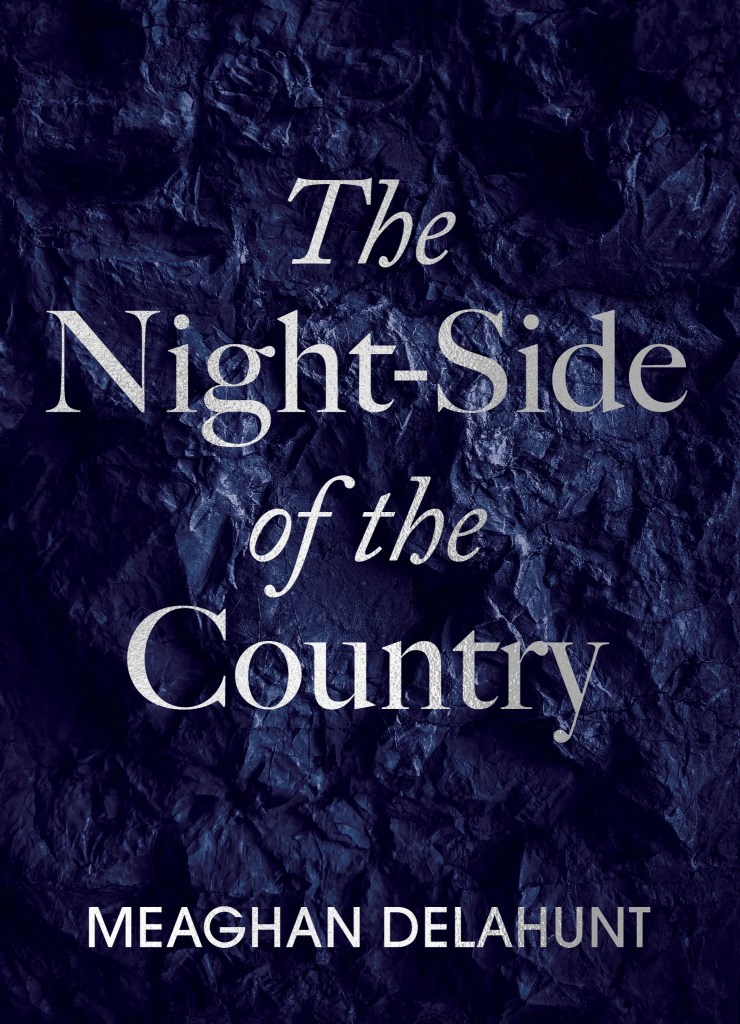
It is the Time of the Felled Men.
M, a writer, finds her own past triggered by the constant revelations of misogyny and violence. The novel she is writing stalls. She speaks out about her past and this has consequences for her life and work – including the threat of litigation. To escape, she retreats to an island off the Scottish coast and there she encounters B – a woman who may or may not be a figment of her imagination. This encounter takes M’s novel in an entirely different direction. As B reckons with her violent political past in an organisation known as the ‘Movement’, she finds herself suffering the consequences of stepping forward and speaking out. Together they create a different story.
All the way through, the threat looms large: A man may come here. We both know this much.
The novel plays with modes of storytelling. It fuses fiction, essay and memoir to address the central questions: How do we deal with trauma and gender violence? How do we give voice to that which has been unvoiced? How do we heal?
This feminist genre-crossing novel explores the creative process as a place of refuge, ambiguity, and as a starting point for resistance. The place where the ‘You’ and the ‘I’ connect.
Purchase from:
 Meaghan Delahunt